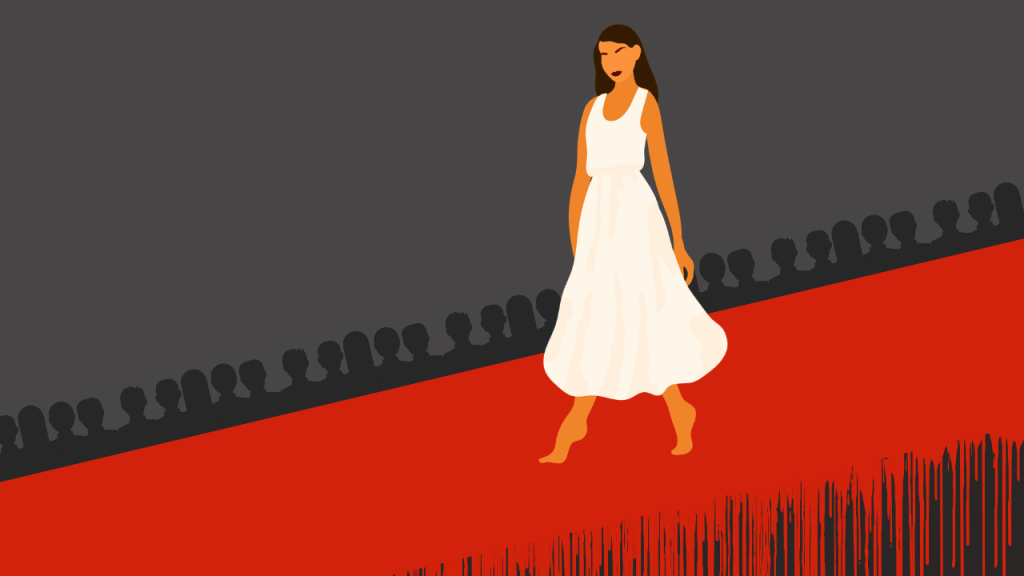

As it seems many of our faves in fashion are unwilling to say it, I will. High street brands are not high fashion houses and their sudden shift in aesthetics and jargon won’t change that. Of course, the supporters of the high street runways in the most recent fashion week will defend brands like M&S, H&M and COS by saying that they are democratising high fashion. And my fight isn’t with them. Because it’s not a debate about elitism.
It’s a debate about art.
What is Art?
It sounds ironic to say my argument isn’t elitist and then build a boundary for what is and isn’t art. But it’s important to not focus on what is being looked at but what we do with art.
Art is treasured. Art is bartered, borrowed and passed down from generation to generation. Art will still be found long after we are gone because people value it and because a) it is unique and b) it is expensive because the hands involved in making art also belong to beings with mouths that need to be fed. So, art ownership needs to be worthwhile.
High fashion is art. Or at least it has been until it got somewhat cheapened. Pieces from fashion houses are preserved and loved in every generation. In contrast, there are landfill sites around the world with high street collections as filler. All of the “chaff” that isn’t good enough for the shop window is sent to places like Kantamanto market in Ghana, where local merchants pay for the brand’s waste. The clothes are unusable and create an environment that none of the people talking about “democratising fashion” would spend a day living in. Young women are facing life-altering spinal injuries trying to transport the bales of clothing. Not to mention the fact that those making the garments in places like Bangladesh hardly make ends meet if at all. This is not art. It is robbery at every angle.
Now, fashion houses aren’t saints either. We’re aware of how unsold products are burned to keep the prices up and maintain an air of exclusivity. Although I’d argue that this is the fruit of a world where they have to compete with a counterfeit, operating much faster at a much lower price. I’ll talk about the counterfeits more in the next section.
Using High Fashion Language Doesn’t Make You High Fashion
Art is created with passion.
The artist has a vision. High street fashion brands, despite now electing “creative directors”, do not. They often steal from high fashion bands and small independent designers, taking advantage of their rapid turnaround time. So they can steal a design and have it on their racks before the independent designer has even got their tech packs finished.
Finishes, layers, texture—there’s also an effort in art to do the unseen work as well as the seen. Galliano’s newest collection, repurposing Zara’s “archives”, is lovely to look at. It is unmistakably Galliano. Many have said it’s reminiscent of his time at Margiela. But it is also unmistakably Zara. So what “archives” could they possibly be referring to? The language being used to force these brands into the bracket of high fashion doesn’t work because unfortunately for the high street, we know where we can find these “archives”.
It is fitting that @ly.as was the person to showcase a jacket from the new collection as he has done so much to democratise high fashion through his renowned watch parties. But users online have also criticised the collection for looking cheap up close. A main issue for consumers is the lack of lining in the coat and how the fabric looked cheap; they wanted real leather. But we forget ourselves. This is not Galliano at Margiela. This is Galliano, creating art for Zara, who, staying true to their business practices, were bound to cut a few corners, clipping the wings of one of fashion’s greatest for profit.
I actually make my own clothes from second hand high street fashion and homeware because I believe in preventing things going to landfill where I can as a creative sewist and a responsible fashion journalist. I take them apart with my seam ripper and reconstruct them into an entirely new garment, saving the scraps for future projects. Despite the marketing around the collection, Zara are using completely new materials to create it. The only things being “repurposed” are past Zara designs, which you now know are often stolen from elsewhere.
It’s Okay To Be Closed Minded On This
Many “tastemakers” and “style” influencers are going to pressure you to accept this shift from high street to high fashion (whilst receiving PR from these brands and failing to disclose this). It’s important that you remember that this shift is about making money. Because if you’re high fashion, you can charge more.
Real high fashion and real art is not just about money. It is about fair wages for every hand on the garment, thoughtful design that is outside of the box, and pieces that you will love and be able to share with those you love.
So if we’re snobs for having standards for our art, let us be stylish ones.

