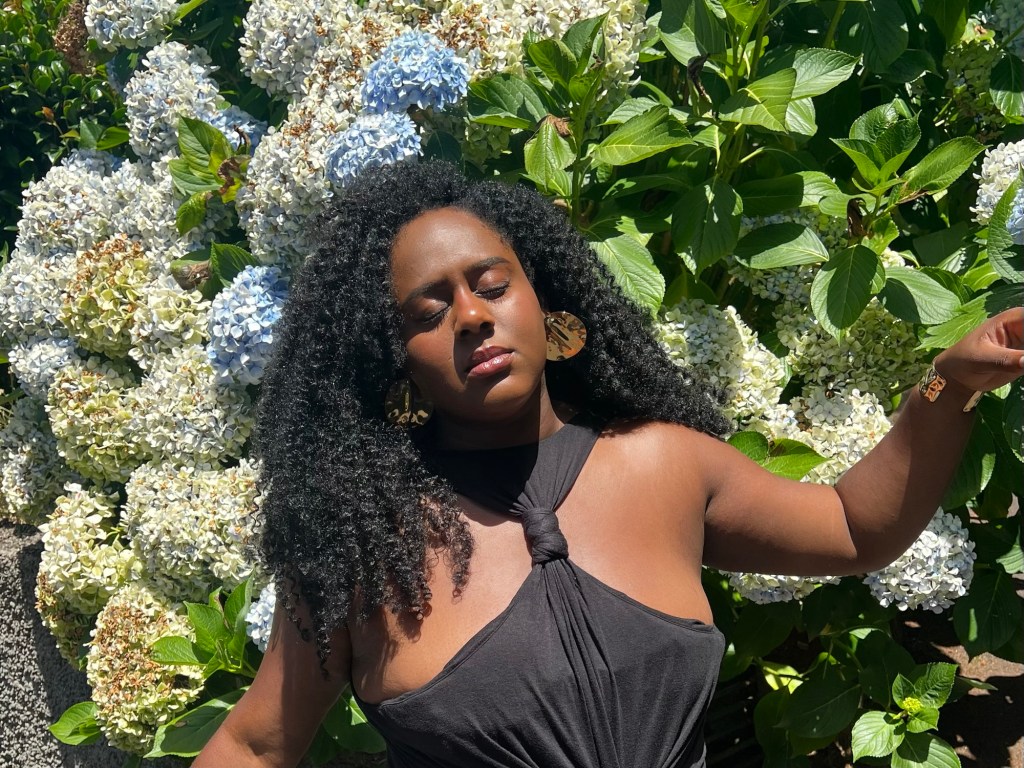

Zendaya has been inescapable. And it’s a good thing. Her looks for The Odyssey press run were ethereal (as intended) and Law’s work is, as always, in a different realm to any other stylist on these red carpets.
The current trend is Grecian. Drapery, linens, chunky bronze-age jewellery and movement that makes us look like we’re floating. The maxi dress is dominating the high street and ruching is the mode.
But this trend of tale and tailoring has been long foretold.
When a heavily pregnant Jasmine Tookes opened the last Victoria’s Secret show in a giant clam, referencing Sandro Botticelli’s Birth Of Venus, I audibly gasped. As a snob, I didn’t believe that high street brands could translate art let alone mythology for the masses. If Dolce & Gabbana did this I wouldn’t be surprised (I’ll return to this thought later.) Having seen the original in the Uffizi, I can say I felt similar levels of awe.
A pregnant woman as a goddess. What a concept. A show with a legacy of skinny letting a pregnant woman open the show gives us an idea of how far the societal view of the body has evolved; not only from sex object to sculpture, but accounting for what we are now learning about women’s bodies. While there’s still so much pressure on pregnant women to “bounce back” and shame around pregnant bodies, Jasmine was a glowing vision in gold, presented to us as life itself.
Why We Long For The Heavens
Perhaps it’s a rejection of the technocracy that we’re being forced into. As technocrats destroy rare books, we face our own library of Alexandria crises and cling to legends before our time.
Fashion is a victim of AI in a way that you might not even know. Major fashion houses such as Louis Vuitton and Gucci to name a couple are using AI to generate new patterns and designs through trend references, mood boards and previous collections. But there’s an Achilles heel: AI models can become cannibalistic, meaning they get to a point where they consume (too much of) the materials they generated. The result is less human and well… less good. It becomes what we now call “slop”. It’s why companies like Anthropic want to feed their models old books. Will these fashion houses face the same fate? Worse yet, where they will turn when there’s no “slop” free material to feed the models?
I think that our desire for flowing linens and hand-hammered metals reflect the mood of our time. Writers like Adam Walker believe that we are approaching a renaissance. “Today the return to the imagination as an active power is beginning in aversion to AI-generated art and an emphasis on human-made value,” Walker says in a substack post. “Although our faculties of the imagination were dulled long before AI came along, it is sufficient to wake us up to the need for real human art, and more than that, an active engagement with the world of the imagination, which is a real world from which the most enduring art and social harmony has come.”
He’s right. Ironically, I am defending one of the tools that have “dulled” our imaginations. The oral tradition was very powerful because it was descriptive. The appearance, thoughts and feelings of characters were left to the audience. Movies are prescriptive and we just accept the director’s interpretation. It limits what we can conjure up but there’s scope to reimagine the story at a later time. AI is more authoritarian than that.
Speaking at the BlackRock Infrastructure Summit earlier this year, Open AI CEO Sam Altman said “”We see a future where intelligence is a utility like electricity or water and people buy it from us on a meter and use it for whatever they want to use it for.”
Remember that the entire premise of AI is generating intelligence from previous intelligence. Imagination is new intelligence built from previous intelligence. We need to start seeing AI as a threat to imagination.
Fashion Has Made Us The Worshipped And The Worshipper
Returning to my thought from earlier on Dolce & Gabbana, there’s a desire to praise expressed in both Holy Week and Fashion Week. The Alta Sartoria 2025 Collection translated of ecclesial garments from the nave to the runway tastefully, skirting around the feel of costume or caricature that other brands unintentionally and intentionally fall foul of.
There may be separation of church and state but fashion still clings to the Godly extravagance that the world deems anathema in a time of economic crisis. The appeal is not just the bling: despite being protestant, I’m amongst the non-catholics (which includes muslims and atheists) that are impressed by the current Pope Leo XIV. His anti-war stance and thoughts on free press are refreshing. I’m not ashamed to say that I read his 40,000-word encyclical on AI and found myself agreeing with him. I am pleasantly surprised that a man with such an archaic station would quote Hannah Arendt. The encyclical reaffirms the ethical, political and security objections to AI, supplemented with the spiritual implications of failing to preserve the dignity of human beings.
Orpheus And Eurydice
We have gone too far in our search for God. Hell and back, to be precise.
In writing this, I feel like an ancient philosopher debating the creation of a new god. One that we claim will serve us but has the capacity to be our end.
Whether we find it in Claude or a Matières Fécales look is not the question. After millions of years working at becoming what we are, my fear is that our premature glance at what the world could be will see the world as we know it be damned.
But knowing what you know, would you still look?
 Cheyenne A. Brown